


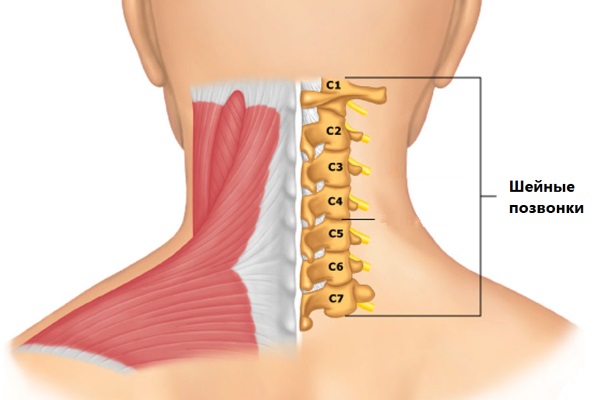
Hernia in the Cervical Spine
Intervertebral hernia is considered a very common condition that many people face. A special group includes cases where a hernia appears in the cervical spine. The reason lies in the specifics of this region. Because of these specifics, serious complications can arise, affecting both the patient’s life and the treatment process.
This disease ranks second in prevalence among all types of spinal hernias, yet it is considered not very common. It mostly affects people aged 30-50. According to American statistics, every two-thousandth person on Earth today suffers from this severe pathology. Among patients who seek medical help, the majority are men.
This common disease arises suddenly, develops rapidly, and very rarely draws timely attention from the patient. As a result, by the time a person learns they have a cervical intervertebral hernia, they are already experiencing spinal pain and constant discomfort, forcing them to give up their usual lifestyle. But the worst part is that many simply ignore it, allowing the condition to worsen.
In fact, a hernia is the actual rupture of the fibrous ring in the spinal disc, as a result of which the nucleus breaks through the outer capsule and protrudes outward. The patient’s condition is further complicated by osteochondrosis, a common companion of this disease. As a result, pain intensifies, and treatment is prolonged.
Hernia in the Cervical Spine. What Difficulties Arise?
The main problem is that a hernia in the cervical spine is not easy to detect because this region is quite small. It can be compared to a “bottleneck,” but in the human body, it is the most vulnerable spot. The volume of the neck is obviously limited, and the same can be said about the diameter of the spinal canal in this part of the spine. However, through this small space, many blood vessels and, of course, nerve canals pass constantly. Their high density is explained by the brain’s need for good oxygen supply and reception of all necessary signals from nerve endings.
In normal conditions, this high density of crucial vessels and canals does not pose a problem. The cervical spine is highly mobile; even a person leading a sedentary lifestyle puts almost constant strain on their neck. This is how the human body tries to “insure” itself against possible problems.
The “flip side” lies in this constant strain. The main cause of most spinal diseases is a disruption of the metabolic process. Often, this phenomenon depends on age, but today, considering the poor environmental conditions and improper nutrition, these problems can occur even in young people. The result, as already mentioned, is the development of osteochondrosis and other spinal diseases, particularly cervical hernia. The intervertebral discs suffer the most.
Causes of Cervical Intervertebral Hernia
The fact that some people constantly suffer from this ailment while others barely know what it is is primarily explained by a predisposition to the disease due to the special structure of their spine.
However, there are other causes of hernia:
- Lack of physical development and weak muscular support.
- Age-related changes in the body affecting the intervertebral discs and provoking hernia formation.
- Smoking, bad habits, excess weight accelerating aging processes, as well as spinal injuries, excessive physical loads, and sudden body turns.
- Osteochondrosis, past infectious diseases, poor posture, etc.
What Are the Symptoms of This Disease?
Doctors say the first signs of this disease may appear as early as age 20 in the form of a banal back pain. However, symptoms of cervical hernia are most often observed after 30, mainly in men or obese individuals.
Typical symptoms include:
- Pain syndrome in the shoulder, thumb, scapula, especially noticeable when tilting the head.
- Numbness and tingling in the arm, muscle weakness, burning sensation, and loss of sensitivity.
- Possible muscle wasting in one arm or leg, and even temporary relief when the arms are elevated.
- Stiffness, dysfunction of internal organs, difficulties in bending and straightening fingers.
Among the symptoms of a cervical hernia, doctors usually highlight sharp or chronic pain sensations, so-called “shooting” pains in the neck area, pain radiating to the shoulder joint and arms, as well as episodes of arm numbness, frequent “crawling ants” sensation, decreased finger sensitivity. Additionally, increased irritability, tearfulness, headaches, dizziness, sharp blood pressure fluctuations, tinnitus, mild cough, and a persistent scratchy throat — these are also symptoms of cervical hernia.
Note an important feature: in the early stages of the disease, pain in the rear cervical vertebrae is intermittent and often dull. Besides this, headaches and dizziness occur due to circulatory disturbances (blood supply to the brain). As the pathology progresses, the patient’s condition worsens noticeably. The pain becomes constant and often truly unbearable. Partial numbness of the upper limbs occurs, gait disturbances develop, various autonomic disorders and muscle atrophy appear, and respiratory paralysis may even develop. All these are signs of a cervical spine hernia that can alert you to the early stages of the disease.
Why Is This Disease Dangerous?
If you notice any of the symptoms described above, it is important to seek timely medical attention because there is a risk that a hernia in the cervical spine can compress one of the arteries that supply the brain and passes through the spine. This means impaired cerebral circulation, which over time can lead to a stroke.
Furthermore, inflammation of muscles or ligaments around the hernia can develop over time. This can lead to cervical radiculitis, a very painful and difficult-to-treat condition. You can avoid this by treating the disc hernia promptly, as it is often the cause of cervical radiculitis.
As mentioned, the cervical spine is very mobile and always under strain as it supports the head. With a cervical disc hernia, extreme backward bending or sudden head turns are very dangerous. Even a slightly careless movement can cause not only pain but also nerve or artery compression. This can lead to loss of sensitivity in any part of the body and, even worse, paralysis or stroke.
If you have symptoms of cervical hernia, remember that late medical consultation only complicates the situation and prolongs treatment. Also, don’t forget the risk of dangerous complications in advanced stages of the disease.
How to Overcome the Disease?
Once diagnosed, treatment begins after a full diagnostic workup. The attending physician should conduct many different tests to accurately determine the size and location of the intervertebral hernia and choose the appropriate treatment methods.
If the disease is not advanced, conservative treatment methods are prescribed. These include manual therapy, massage, acupuncture, acupressure massage, hirudotherapy, gymnastics, and physiotherapy procedures. Blockades and drug therapy are not always effective because they do not eliminate the cause of the disease but only reduce inflammation, providing a short-term effect.
If pain persists after these procedures, neurosurgical intervention to remove the hernia is usually necessary. Surgery carries a high risk of recurrence. Scars formed after surgery may cause symptoms similar to those before treatment, indicating failed back surgery syndrome. Additionally, the spine is often injured during surgery, which can lead to various complications, including disability.
An alternative and more effective treatment method for intervertebral disc hernia is intradiscal microtherapy using Discogel®—which alters the disc nucleus so that the hernia regresses and healing occurs. The treatment is done under local anesthesia. Today, this method is the only one where damaged and destroyed tissues are not removed but restored. Unlike most modern methods, Discogel use does not reduce disc height.
Discogel is a unique opportunity to cure intervertebral hernia without surgery! This modern, innovative product was specially developed for treating intervertebral hernias. It represents an absolutely new and safe solution and is a real alternative to surgical intervention.

