


The problem of replacing bone defects in orthopedics and traumatology is one of the main challenges in restoring bone function and preventing recurrence of chronic osteomyelitis.
In recent years, biodegradable implant materials have been increasingly used for this purpose.
Specifically, there is successful experience with the collagen-apatite composite “LitAr” (a plastic material for filling bone tissue defects). This is an apatite-collagen or apatite-polysaccharide composite obtained by directed diffusion of Ca²⁺, OH⁻, and PO₄³⁻ ions within a polymer fiber matrix. This method allows the formation of not only nanometer-sized salt crystals but also achieves a high degree of structural integration between the polymer matrix and hydroxyapatite.
Composition of LitAr:
- Hydroxyapatite – 80-85%
- Biopolymer – 15-20%
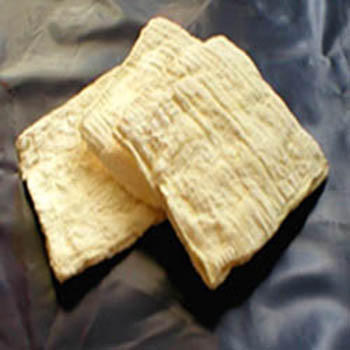
The implant is available as plates of various sizes (from 1×0.5 to 8×8 cm) and as a powder in a syringe.
The average size of apatite crystals in LitAr and in bone tissue are similar: LitAr – 44 nm, bone – 37 nm. Thanks to this, LitAr influences the body’s multipotent cells, ensuring full regeneration of native bone tissue in traumatology and orthopedics.
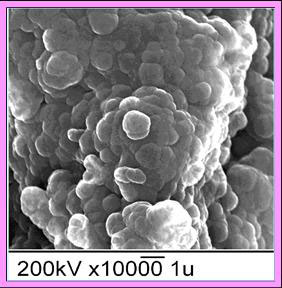 | 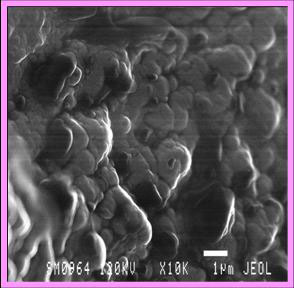 |
| LitAr Composite / Bone Tissue | |
Chemically, the material is close to the mineral composition of bone tissue, is non-antigenic, is not rejected in case of infection, and fully lyses within 7–10 days after surgery.
Morphologically, this material is neither osteoinductive nor osteoconductive, as it “attracts” stem cells to the implantation site. Tissue regeneration depends on the topographical and anatomical characteristics of the defect area (bone or soft tissue). This is achieved through a patented technology that ensures structural integration of components (hydroxyapatite crystal mixture on collagen fibers in situ), resulting in a high rate of implant lysis within the body. It has been shown that the composite biodegrades in the tibial diaphysis cavity within 2–3 weeks.
During this process, connective tissue forms in the defect zone, which gradually ossifies. LitAr also uniquely attracts stem cells to the implantation area during biodegradation.
Advantages of Using LitAr:
- Minimal biodegradation time (20 days).
- Shortens treatment and rehabilitation periods.
- No complications typical of traditional implants such as rejection, uncontrolled biodegradation, infection, or lack of strength.
- Does not cause immune response, rejection, or support infection.
- No additional surgeries required.
- Can be used in oncology and excludes risk of HIV and hepatitis transmission.
- Injectable application is possible.
- Easily molds to the defect area and reliably fills cavities of complex shapes.
- Provides reliable regeneration of bone and parenchymal tissues.
- Activates genetic memory and stimulates regeneration at the genetic level.
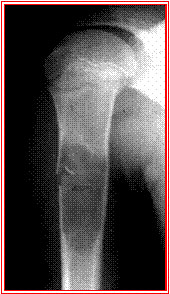 |  |
| Start of the operation | 20 days after surgery |
LitAr composite is produced using a patented Russian technology. Currently, hospitals and medical institutions in about 60 cities across Russia, Ukraine, Kazakhstan, Georgia, Romania, Spain, and Italy successfully use this material in clinical practice.
Clinical Applications and Experience
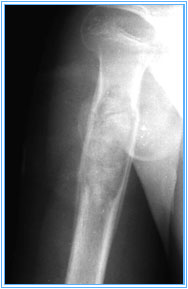
- First used to restore a bone cyst defect in the shoulder.
- Successfully restored a 12 cm bone defect in the tibia (osteoblastoclastoma).
- Applied in defects of the femoral head and neck, scaphoid bone in hand and foot, heel bone.
- Injectable use in cases of pseudoarthrosis or delayed bone fragment consolidation.
- Applied in treating gout and filling sequestral cavities after inflammation sanitization.
- Used in craniofacial surgery, neurosurgery (cranioplasty), and ENT (rhinoplasty, myringoplasty, mastoidoplasty), including restoring cortical bone in the maxillary sinus after surgery for sinusitis.
- Effective in restoring bone structure in extensive jaw defects after cyst and benign tumor removal, and tooth replantation.
Use in Gynecology and Urology:
- Cervical erosion: LitAr suspension injected submucosally with lidocaine anesthesia, 100% healing rate.
- Nabothian cysts: Injected into cysts, disappearing in 100% of cases.
- Improves endometrial receptivity (administered three times).
- Endometriod uterine cysts: laparoscopic injection.
- Post-conservative myomectomy and cesarean section use to form a reliable scar.
- After coagulation, usually eliminates existing pain.
- Used for Peyronie’s disease (corporoplasty).
- Treats stress urinary incontinence.
Use in Thoracic Surgery:
- Regenerates soft tissues in defects after echinococcectomy.
- Experimental use in filling tuberculosis cavities.
The mechanism behind LitAr’s regenerative process likely involves stem cell activity, making the study of stem cell involvement the most promising area for future research.
Use in Internal Organ Trauma:
LitAr is used intraoperatively to tamponade liver, lung, and kidney wounds accompanied by bleeding. Following application, connective tissue forms, which ossifies only into the type of tissue normally found at the defect site.
Summary:
The polymer-salt nanocrystalline material LitAr is an effective option for filling cavities and defects, both intraoperatively and by injection, supported by over ten years of positive clinical experience.

