


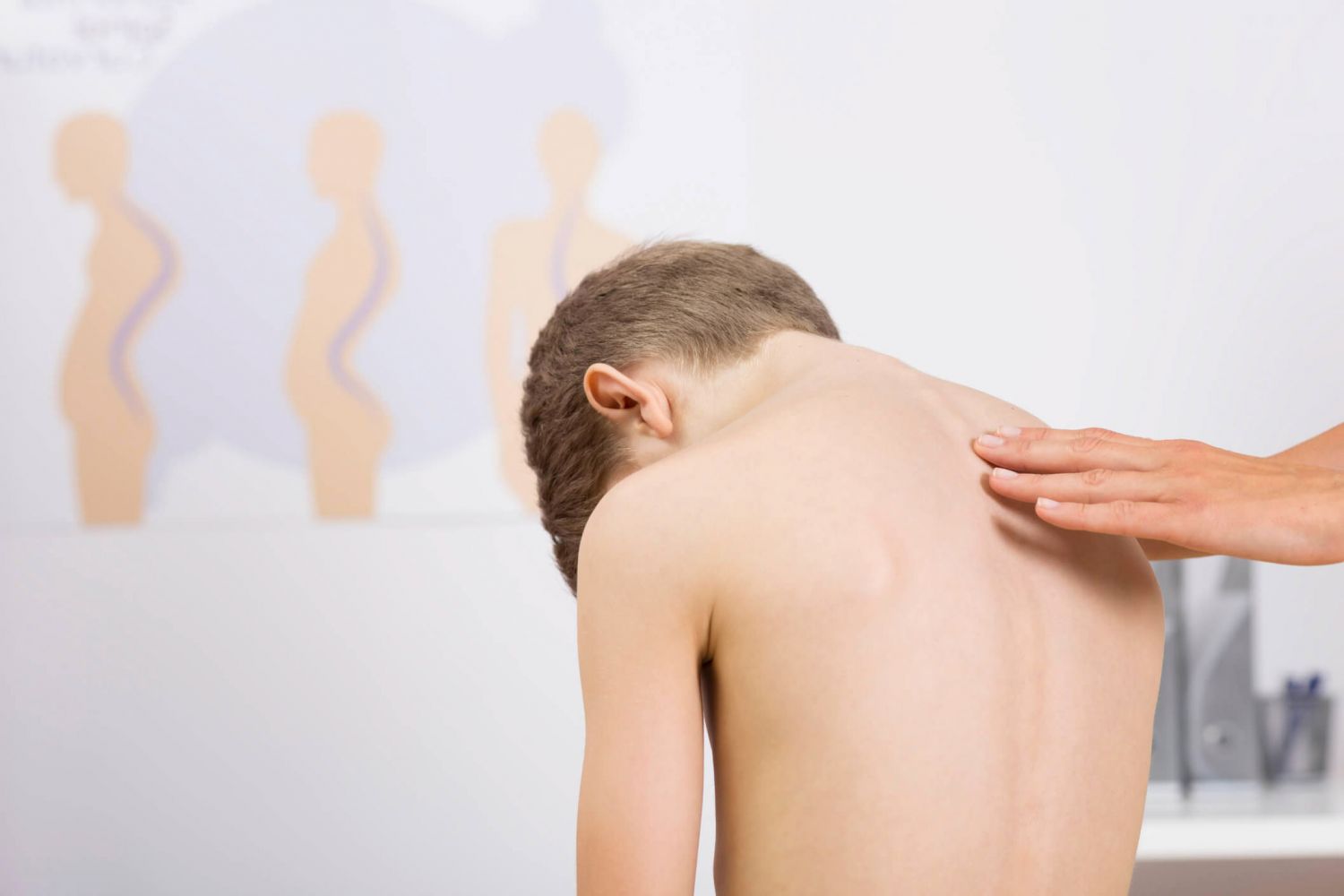
The diagnosis of “scoliosis” is made in almost every second school child during routine medical exams at children’s clinics or schools. So, most people have heard of it, if not all. However, it is important to understand that posture problems, slouching, and scoliosis are not the same thing.
Scoliosis is a three-dimensional deformity of the spine, where the vertebrae twist (torsion) relative to each other, resulting in the formation of a rib hump. This leads to a change in the position of the organs in the chest, disrupting the function of the musculoskeletal, respiratory, nervous, and cardiovascular systems. In severe cases, the spinal cord is affected.
In other words, scoliosis is a serious, progressive condition, not just a minor issue with posture, as it is often misunderstood. 80% of diagnosed scoliosis-like deformities are actually unrelated to true scoliosis. It is often confused with posture problems, such as slouching, asymmetry of the chest, or insufficient spinal curvatures.
Scoliosis cannot be accurately diagnosed without performing X-rays in two planes. Only after that can a doctor draw conclusions and provide individual recommendations. On an X-ray, the level of skeletal development, the exact angle of vertebral misalignment, the curvature of the vertebrae in different planes, and pelvic positioning are clearly visible. In more complex cases, doctors may recommend CT (computed tomography) and MRI (magnetic resonance imaging). For detailed examination, when scoliosis is complicated by internal organ diseases, additional tests like electrocardiography (ECG), abdominal ultrasound (US), and consultations with specialized doctors may be required.
Treatment of Scoliosis
The treatment methods for scoliosis in children depend on how advanced the condition is. The earlier scoliosis is diagnosed in a child, the easier and more effective it can be treated. There are many cases where severe forms of scoliosis could have been prevented if prophylactic treatment had started early.
It was once believed that when scoliosis was detected in a child under the age of 10, conservative treatment (like bracing) should be initiated, with bracing continuing until the child reached 14-16 years old, followed by surgical intervention only afterward. Unfortunately, this approach often led to the development of severe, non-operable deformities by the age of 13-14, with significant dysfunction of the internal organs.
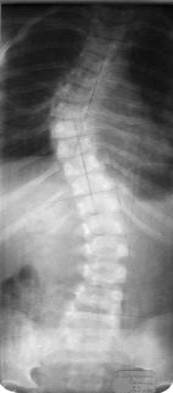
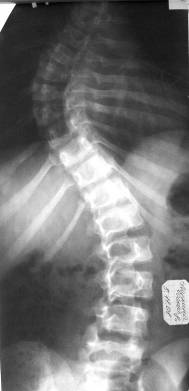
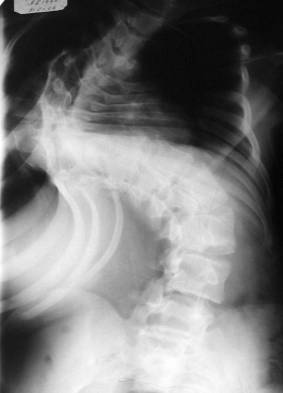
Treatment Methods and Tactics for Juvenile Idiopathic Scoliosis Patients:
- For spinal deformity up to 20 degrees (Stage II scoliosis), the focus is on strengthening the back muscles to create a “muscle corset.” This can be effectively achieved through swimming and specialized physiotherapy exercises.
- For curvatures from 20 to 40 degrees (Stage III scoliosis), the child will need to wear an individual Sheno brace. This is made of a rigid shell and is the only scientifically proven method for treating scoliosis without surgical intervention.
- For curvatures over 40 degrees (Stage IV scoliosis), surgical correction is necessary.
A spinal curvature of up to 10 degrees is considered physiological asymmetry and does not require special treatment.
Surgical Strategy for Patients with Juvenile Idiopathic Scoliosis under 12 Years:
Minimally invasive technique – correction through two incisions of no more than 5 cm, with the subcutaneous insertion of corrective rods and subsequent deformation correction every 1-2 years by 1-1.5 cm through a 3-5 cm incision at the connector site.
Deformation correction using a device developed and applied in our clinic, which blocks the convex side and preserves the ability for growth on the concave side (Patent MD. 77).
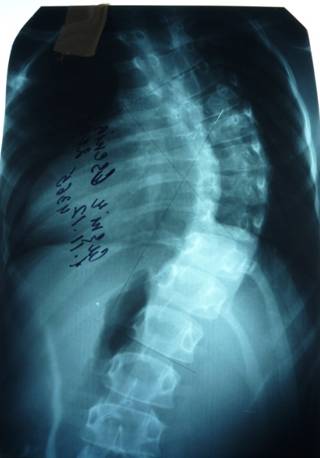
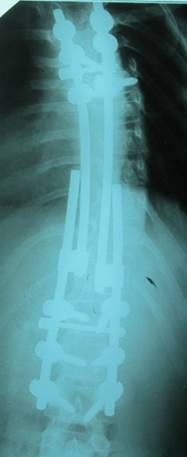
Clinical Case:
A 8-year-old patient with idiopathic scoliosis, Stage IV.
Thus, I want to emphasize that scoliosis cannot be treated at home. It is a condition that is difficult to treat and does not resolve on its own. Therapeutic exercises, posture correctors, massage, or spinal adjustments often only worsen the situation — the process of deformation accelerates. As for manual therapists, when they “adjust” the spine in cases of true scoliosis, they further destabilize the spinal column, which speeds up the deformational processes.
If your child has been diagnosed with scoliosis, you should regularly visit an orthopedic traumatologist. The frequency of visits is determined on an individual basis. In the absence of complaints and medical indications, visits should be made every 6-12 months during periods of rapid growth. Take care of yourselves and your children!

