


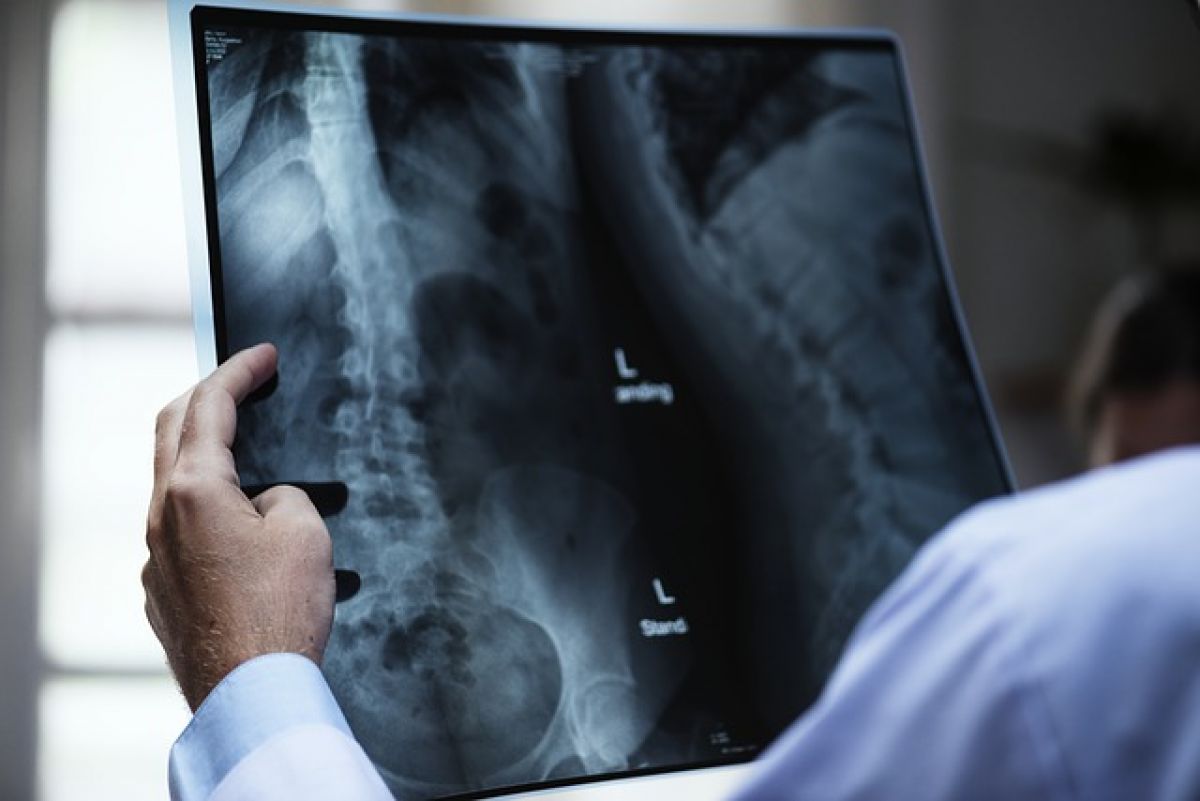
All known forms of scoliosis are divided into two groups: congenital and acquired.
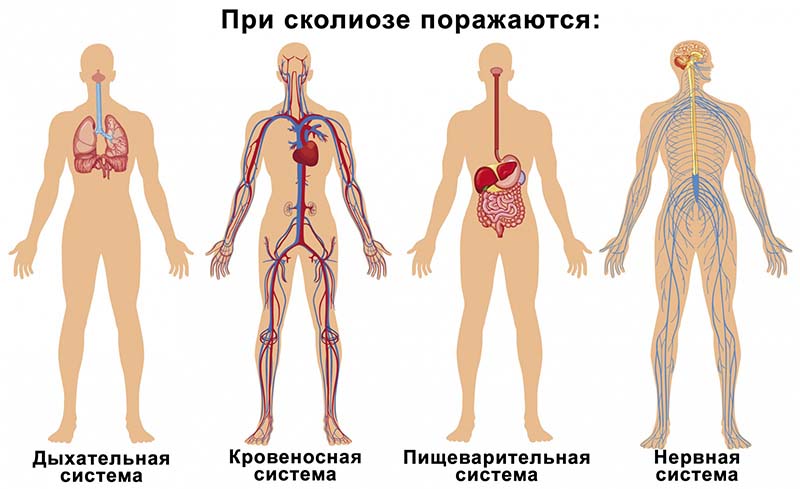
Congenital scoliosis is diagnosed within the first days of life. Its causes may include intrauterine developmental disorders or hereditary factors. The primary reason for this form of scoliosis is underdevelopment or abnormal shape of the vertebrae. In 20% of cases, congenital scoliosis is accompanied by other system pathologies, such as cardiovascular, nervous, or genitourinary disorders.
Acquired scoliosis is often the result of previously suffered illnesses.
This type of scoliosis can develop due to:
- Joint hypermobility syndrome
- Congenital vertebral deformities
- Congenital torticollis
- Rickets
- Congenital or trauma-induced leg length discrepancy (when the difference between the right and left leg exceeds 2–4 cm)
- Neuromuscular disorders – for example, scoliosis often develops in children with cerebral palsy (CP), and also in children who have suffered from poliomyelitis or tick-borne encephalitis; it is also common in people with syringomyelia or central (spastic) paralysis
- Bone metabolism disorders
- Trauma and amputations due to accidents or surgeries
- Rarely – in children after heart surgery
Even moderate forms of acquired scoliosis (the type most commonly affecting children and adolescents) can lead to serious complications. These include:
1) Impaired heart and lung function
In some cases, scoliosis of the thoracic spine can cause the rib cage to compress the lungs and heart, making it harder to breathe and reducing the heart’s ability to pump blood efficiently.
2) Chronic back pain
Scoliosis almost inevitably leads to various back problems. Adults who developed scoliosis in childhood typically suffer from chronic back pain more frequently than others.
3) Postural and aesthetic issues
Scoliosis severely affects posture, gait, and appearance. Once scoliosis progresses to a more advanced stage, it causes visible physical changes, such as:
- Uneven shoulders
- Prominent ribs
- Asymmetrical hips
- Waist shifting to one side
Children and especially teenagers with scoliosis often become self-conscious about their appearance, which naturally affects their mental and emotional well-being.
To prevent spinal curvature in children, it is important to take preventive measures against scoliosis from birth.
- Never rush a baby’s physical development. A child should begin to turn over, sit up, crawl, and walk only when their body is ready and strong enough. Most pediatric orthopedists agree that the longer a baby crawls, the stronger their back muscles become, making them more prepared for an upright position without developing spinal deformities.
- When walking with your toddler and holding their hand, remember that this puts strain on one shoulder, hip, and side of the body. To avoid asymmetrical loading, you should frequently alternate the hand you’re holding during walks.
- A newborn’s crib mattress should not be too soft, and pillows are not recommended. It’s best to purchase a specially designed orthopedic infant mattress.
- Ensure your baby gets enough fresh air and sunlight, as vitamin D is crucial for strong and healthy bones.
- Teach your child to maintain good posture, not only while walking and sitting but also while lying down. Avoid long periods of lying on one side while reading or watching TV.
Idiopathic scoliosis sometimes (though not always) develops in sedentary children, especially those who spend long hours sitting at home, in front of the computer, or at school in an incorrect posture.
When a child constantly leans too far over their notebook or keyboard and has a habit of pushing one shoulder forward (usually the one used to write or operate a mouse), they unknowingly twist their spine, rotating their torso toward that hand. Over time, the back muscles and spine adapt to this misalignment, and scoliosis begins to develop. This type of scoliosis often starts and progresses rapidly during adolescence, particularly during growth spurts between ages 10 to 17.
Idiopathic scoliosis may also develop in young athletes who engage in asymmetrical sports, where one arm or one side of the body is used much more than the other. Examples include:
- Tennis
- Badminton
- Shot put or javelin throwing
- Archery
- Rifle shooting
The same issue can affect young musicians who play asymmetrical instruments. For instance:
- Violinists frequently suffer from scoliosis
- In contrast, drummers and pianists (who use both hands evenly) rarely experience “professional scoliosis”
Of course, not every child with a sedentary lifestyle and poor posture will develop scoliosis. The development of scoliosis usually requires a combination of factors such as:
- Weak ligaments
- Poor muscle tone
- Nervous system imbalances
- Genetic predisposition
Nevertheless, the fact remains that active, physically developed, athletic children (especially those engaged in symmetrical sports) are much less likely to develop scoliosis compared to their peers who spend most of their time in front of a computer or desk and rarely go outdoors.

