


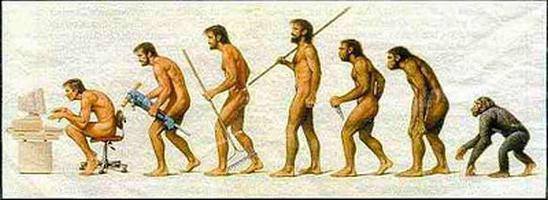
As soon as the first human stood up on two legs and proudly raised their head, they doomed all their descendants to suffer from spine-related problems.
In four-legged animals, the spine is positioned horizontally and serves to balance all parts of the body. Such a spine remains in perfect condition for a long time and can withstand any stress, strain, and adverse factors. In humans, however, the spine became a pillar or column, turning into a part of the body that is very easy to damage.
Numerous modern studies have shown that pathological changes in the spine are not characteristic of individual people or groups but of humanity, as a biological species. These changes lead to approximately 80% of men and 60% of women suffering from spinal diseases by the age of fifty, with clinical symptoms usually starting during the most productive period of life, around 35 years old on average.
Recently, the incidence of herniated discs has nearly tripled. The main cause of this severe disease is metabolic disorders in the intervertebral disc. The amount of water entering the nucleus of the intervertebral disc decreases due to genetic predisposition, metabolic disturbances, and age-related changes.
The more a person sits still during the day without movement, the greater the load on the intervertebral discs.
The appearance of hernias and protrusions means that the muscular corset does not meet the demands of daily life. You might say, “My job is not heavy; I don’t experience super loads.” But it is precisely when we sit for long periods without movement—whether in front of the TV or at the computer—that this is the most enormous strain: the muscular corset is relaxed, and the discs “compress” or flatten, leading to hernias and protrusions.
These diseases are accompanied by back pain radiating to the buttocks or legs, depending on the level of the spine affected. The earlier the disease is detected, the easier it is to manage. Therefore, do not wait until the pain becomes unbearable; at the slightest discomfort, seek medical help, definitely get an MRI (magnetic resonance imaging), and if it reveals one of the mentioned diseases, you need to take your health seriously—otherwise, surgery will be inevitable.

