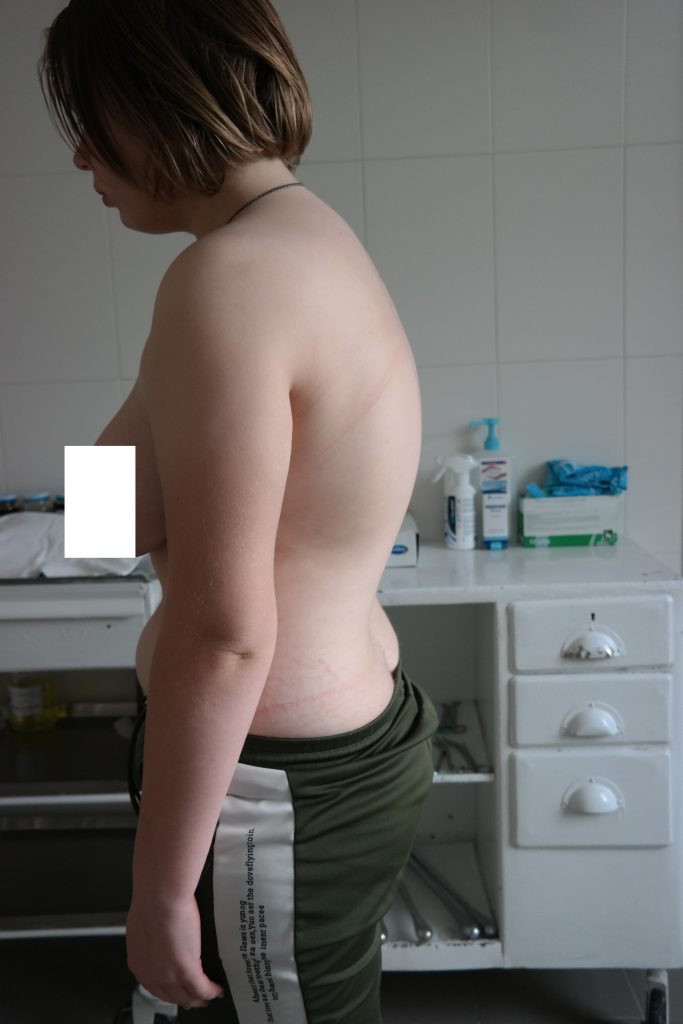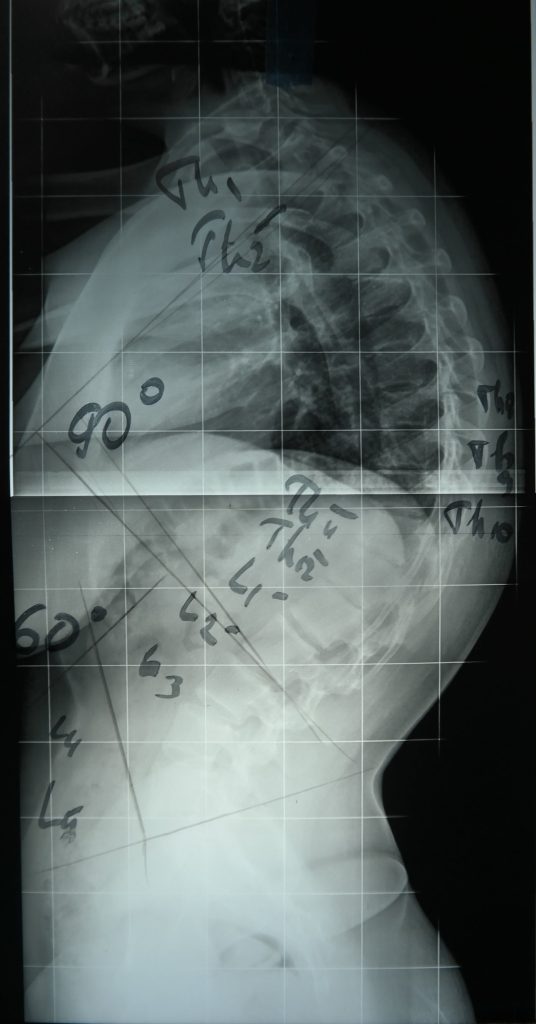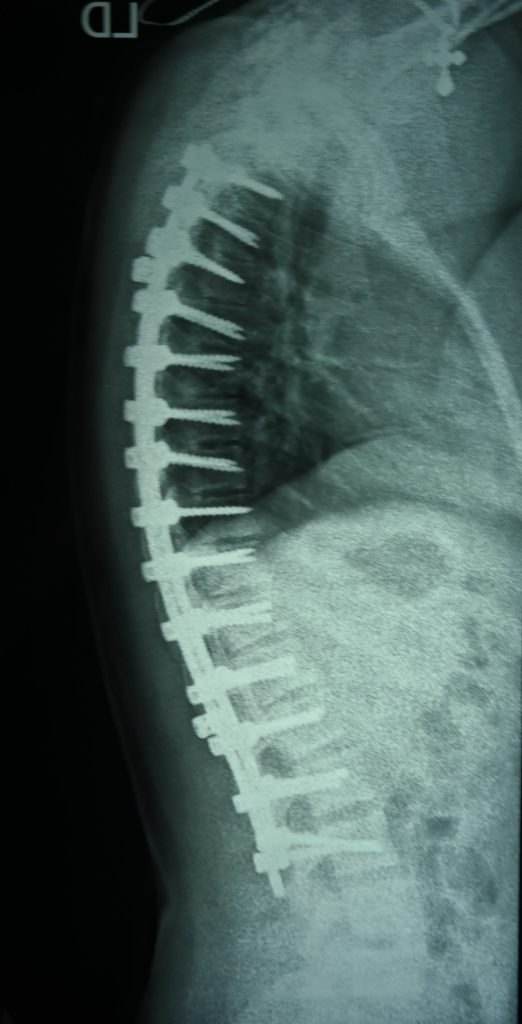


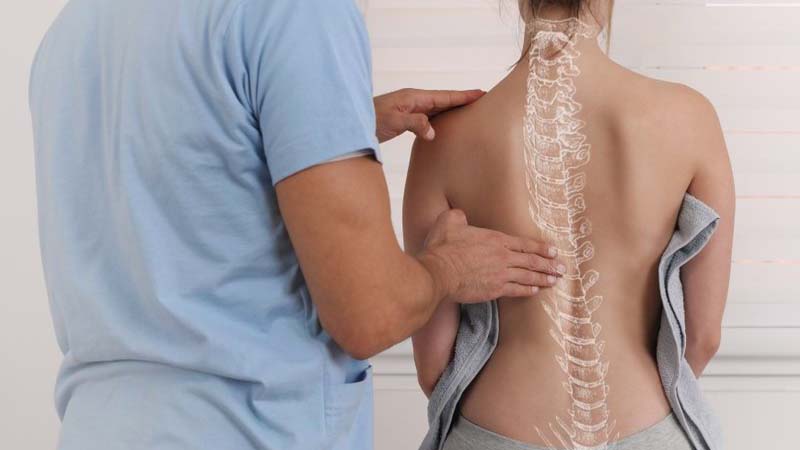
Kyphosis is a disease characterized by a curvature of the spine in the sagittal plane, resulting in a hump forming on the back. In most cases, the disease develops alongside scoliosis. Kyphosis in children is often detected between 6 and 12 months of age.
Types of Kyphosis:
- Congenital kyphosis – a pathology of embryonic development, often accompanied by disorders of the genitourinary system and lower limbs.
- Post-traumatic – a consequence of fractures of the thoracic or lumbar spine.
- Degenerative – accompanies other spinal diseases.
- Paralytic kyphosis – may occur with diseases affecting the central nervous system such as poliomyelitis or cerebral palsy.
- Postoperative – develops after unsuccessful spinal surgery or failure to follow postoperative care.
- Genotypic – caused by chromosomal abnormalities.
Classification by location:
- Cervical kyphosis
- Thoracic kyphosis (upper, middle, lower thoracic)
- Thoracolumbar kyphosis
- Lumbar kyphosis
Degrees of kyphosis:
- Grade 1 (physiological kyphosis): up to 20 degrees of deformity
- Grade 2: 21–55 degrees of deformity
- Grade 3: 56–90 degrees of deformity
- Grade 4: 91 degrees and above of spinal deformity
By age of onset:
- Infantile kyphosis
- Kyphosis in young children
- Juvenile kyphosis
- Adult kyphosis
Causes of development:
In children and adolescents, kyphosis can develop due to poor posture, congenital anomalies, or Scheuermann’s disease.
In adults, causes include:
- Spinal infections negatively affecting joints (e.g., tuberculosis)
- Ankylosing spondylitis (Bechterew’s disease)
- Osteoporosis
- Degenerative arthritis
- Marfan syndrome
- Congenital defects
- Poliomyelitis and paralytic changes
- Tumors
- Back injuries
- Previous surgeries
Symptoms:
The main factor is the degree of curvature.
- Grade 1 kyphosis manifests as fatigue and mild muscle pain, mostly by the end of the day. Posture disturbances and slouching may also be observed.
- Grade 2 kyphosis worsens with compensatory lordosis; pain and slouching intensify, with the head and shoulders drooping downward.
- Grade 3 kyphosis leads to limited spinal mobility and internal organ dysfunction due to compression by the deformed chest.
Dangers of the disease:
Any untreated spinal curvature leads to dysfunction of internal organs and various body systems. It also causes aesthetic concerns. Over time, without treatment, the deformity becomes irreversible and worsens with age, potentially causing problems with digestion, heart function, urinary and reproductive systems, musculoskeletal system, and more.
Diagnosis:
Correct diagnosis is critical. Treatment is prescribed based on severity, progression rate, and patient age. Consultation with neurologists, orthopedists, and psychologists is necessary.
Diagnosis begins with patient history and examination to identify disease triggers. This is followed by X-rays to determine curvature degree and associated factors. MRI of the spine, ultrasound of intervertebral discs, and angiography may also be performed as indicated.
Risks of untreated kyphosis:
- Formation of a hump on the back
- Loss of spinal function
- Pelvic organ dysfunction
- Disproportion of the torso in adolescents
- Breathing difficulties
- Paresis or paralysis of the lower limbs
- Spinal meningitis
Risk groups:
- Children under 15 years old
- Elderly people
- People with osteoporosis
- Individuals with spinal injuries
- People with connective tissue disorders
Treatment:
- Medications (vitamin D, calcium)
- Physiotherapy (electrophoresis, ultrasound therapy)
- Wearing therapeutic braces
- Therapeutic exercises
- Manual therapy
- Massage
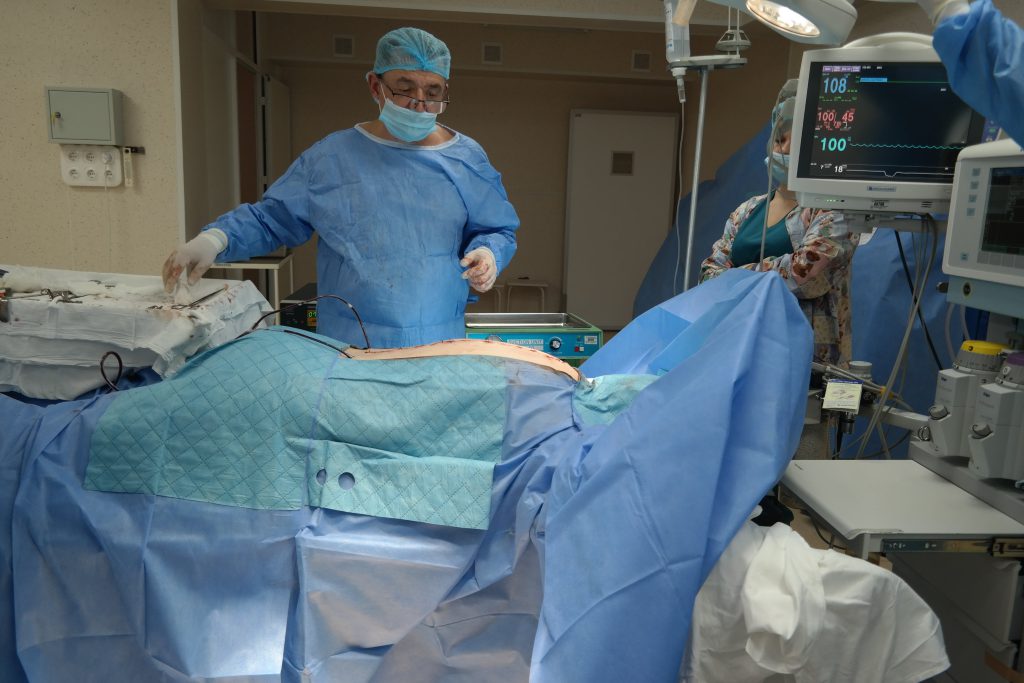
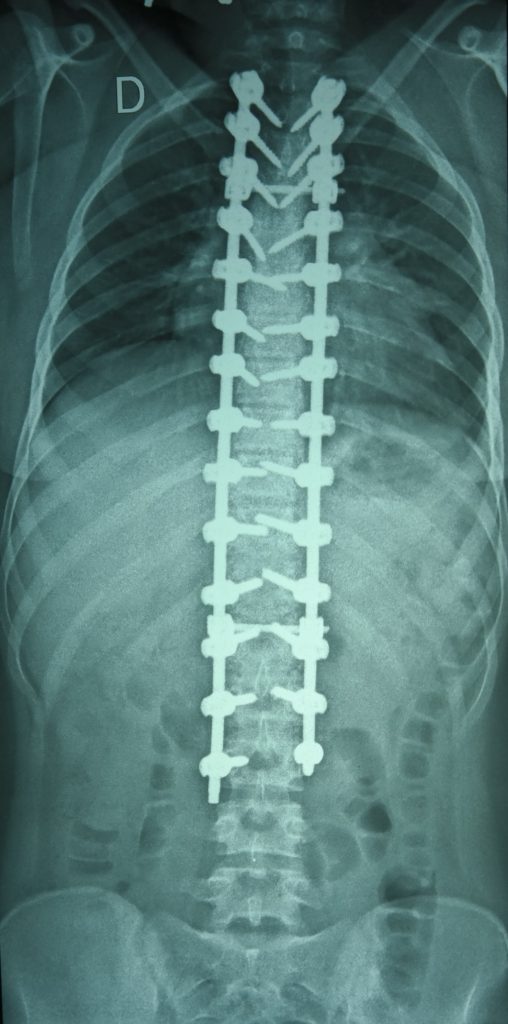
- Surgery (to correct deformity and stabilize the spine)
Surgery is performed if conservative treatment fails or in rapidly progressing cases with severe pain and deformity affecting lung and heart function.